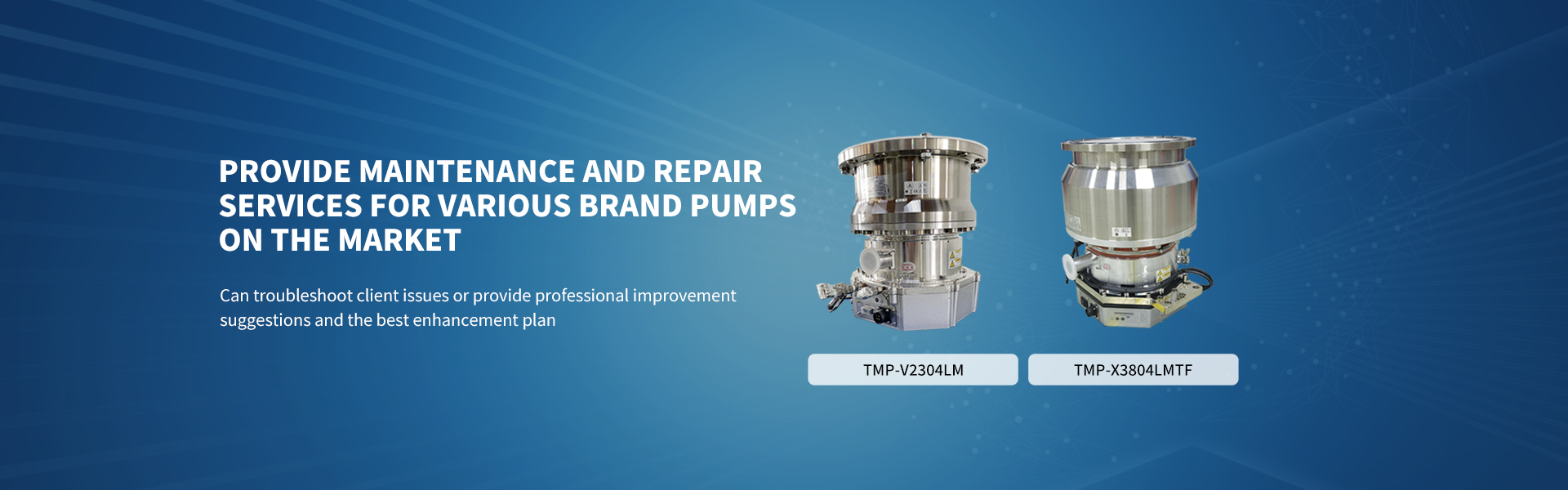
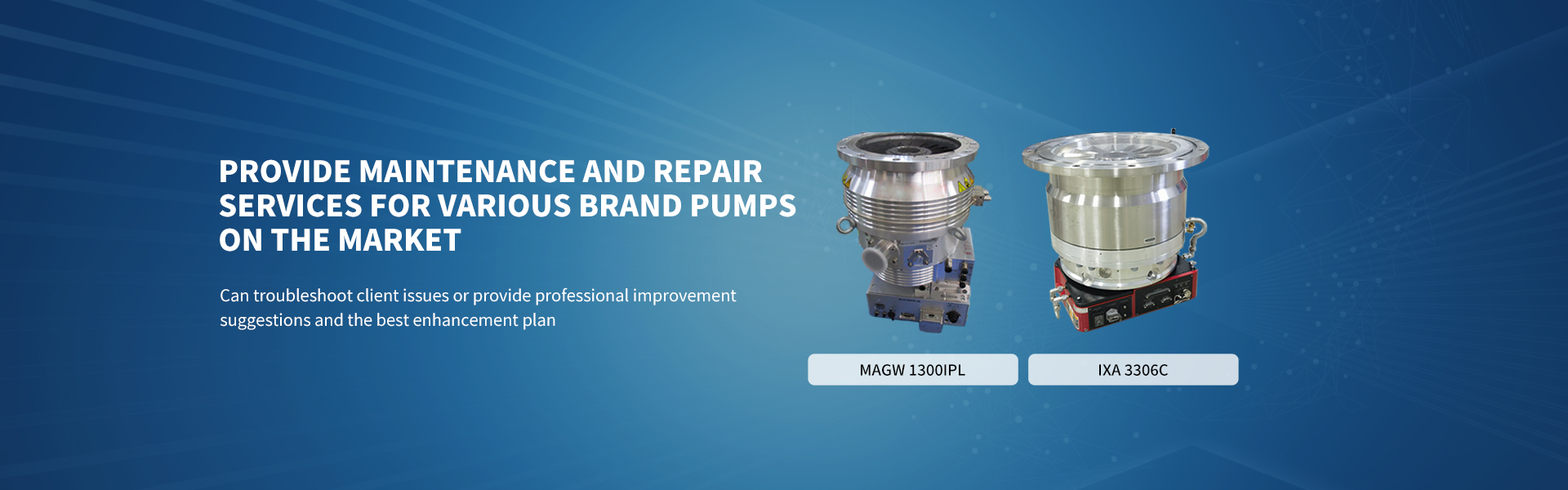
The maintenance process of molecular pumps can be roughly divided into: reproducibility confirmation → electrical characteristic detection → decomposition → packaging → cleaning → replacement of spare parts package → rotor dynamic balance adjustment → reassembly → adjustment of various mechanical parameters and sensor calibration → pump body leakage detection → operation testing (including two extreme states of vertical and horizontal operation, while monitoring its dynamic parameters with a spectrum analyzer) → packaging. The details are as follows:
1. Reproducibility confirmation
Purpose: To confirm again whether the molecular pump has been damaged during customer use and transportation. If damage occurs, lock the damaged area in advance to prepare for repair.
2. Electrical characteristic testing
Purpose: Used to measure whether the electrical characteristics of various magnetic drive coils and displacement sensors inside the pump body are qualified, which is further testing based on reproducibility confirmation.
3. Decomposition
Reason and purpose: To ultimately confirm the condition of each component and prepare for cleaning. Only after disassembly can various parts inside the pump body be cleaned.
4. Cleaning
Reason and purpose: To wash away the attached products and other impurities inside the pump body, improve the use condition of the molecular pump, which is also one of the main purposes of molecular pump maintenance.
5. Replace the spare parts package
Reason and purpose: The spare parts package mainly includes protective bearings and sealing rings. Due to the reduced protective effect of the previously used protective bearings due to rotor impact and product corrosion, and the aging of the sealing ring due to service time and product corrosion, both must be replaced in order to enhance protective performance and sealing.
6. Rotor dynamic balance
Reason and purpose: After using a molecular pump for a period of time, due to adverse effects and effects such as stress deformation, temperature effects, various impacts and vibrations, electromagnetic disturbances, and pressure disturbances, the dynamic balance of the rotor will deteriorate, leading to vibration and shock of the rotor, which is easily damaged. Sometimes it may not even start properly.
Dynamic balancing is divided into two steps:
(1) Upper dynamic balance, which is a rough adjustment before assembly, can only meet the assembly standards and cannot meet very precise requirements. So, after this step is completed, further precision balancing techniques are needed to eliminate assembly errors and temperature effects;
(2) The on-site dynamic balance after assembly, i.e. overall dynamic balance, is a precision adjustment that can eliminate assembly errors and temperature effects. This step plays a decisive role in the stability and reliability of the molecular pump.
7. Reassembly
Reason and purpose: After completing the above steps, reassembly is a natural process, and any machine that does not assemble in the form of loose parts cannot be used.
8. Adjusting various mechanical parameters and sensor calibration
Reason and purpose: Every machine faces various parameter debugging and adjustment after assembly, and molecular pumps are no exception. The adjustment content also includes the parameters of the mechanical part and the calibration of each sensor.
9. Leakage detection of pump body
Reason and purpose: As a vacuum acquisition device, any leakage is not allowed. Therefore, leak detection of the pump body is also an essential part of the operation.
10. Operational testing
Reason and purpose: As a super high-speed rotating equipment supported by magnetic levitation bearings, it is necessary to conduct operational testing on molecular pumps. The testing content includes the dynamic parameters of the pump body in an upright state and the dynamic parameters of the pump body in a horizontal state. A spectrum analyzer is used to strictly monitor the dynamic parameters and parameter changes of each main resonance zone, as well as the trend of parameter changes throughout the acceleration and deceleration process. Each major parameter must be qualified. This is the most important and rigorous homework step
11. Electromagnetic interference test
Due to the use of magnetic levitation bearing technology in molecular pumps, testing for external electromagnetic interference is essential. If the electromagnetic interference in the working environment is too large or strong, it will inevitably affect the stability and reliability of the molecular pump operation.
12. External vibration and impact simulation testing
The main shaft of the molecular pump is in a suspended state during operation, which puts forward high requirements for external vibration and impact. This testing work must be carried out during the operation testing process.
13. Vacuum degree confirmation
The vacuum degree confirmation standard for molecular pumps is: the vacuum degree must reach 5.5X10⁻⁵Pa within 8 hours, otherwise it will be considered unqualified.
14. Confirmation of power generation protection
At present, the vast majority of magnetic levitation bearing molecular pumps are equipped with power generation protection function, and it is necessary to confirm whether this function is normal during maintenance. Otherwise, in case of high-speed impact, the consequences will be very serious.
15. Packaging
Reason and purpose: After the above operations are qualified and completed, the pump body needs to be packaged in order to be returned to the user. The packaging must meet the requirements of sealing, drying, and moderate filling strength.
16. Repair completed, return to customer


 0769-87938061
 wisdom@dgabridge.com
 Room 603, Building 1, No. 5 Jiaolong Road, Tangxia Town, Dongguan City, Guangdong Province


